
For decades, the northeastern Atlantic seabed has been a silent witness to human activity. Hundreds of thousands of barrels of radioactive waste, dumped by nuclear-capable countries between 1950 and 1990, have become a major challenge for today’s scientists and international organizations. The recently completed interdisciplinary research mission under Project NODSSUM has shed new light on the scale and potential consequences of this issue.
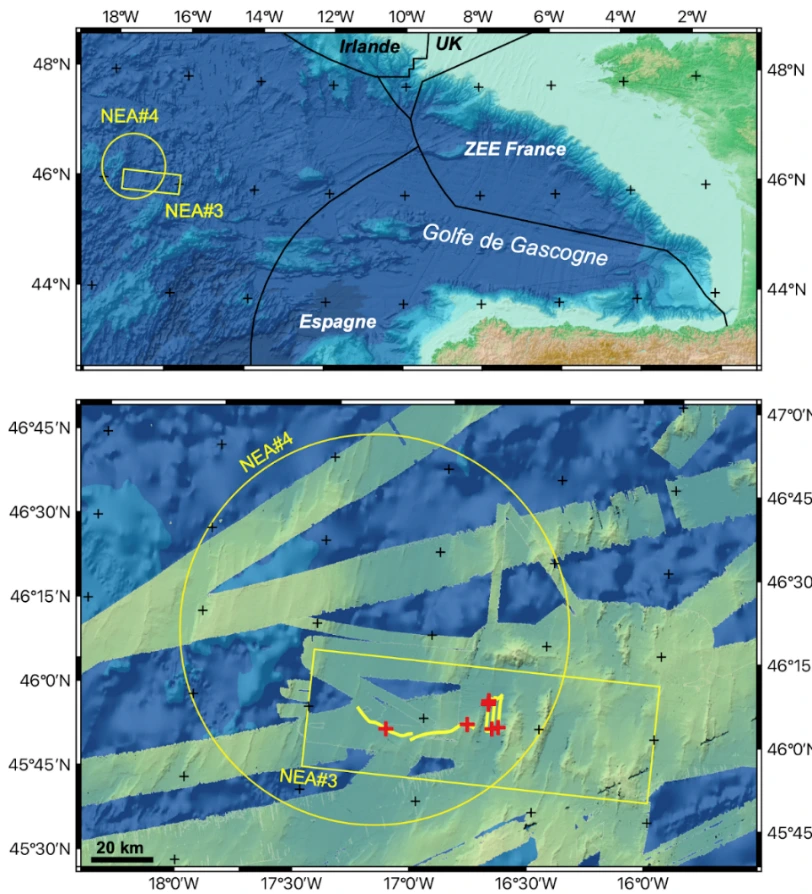
Project NODSSUM brought together experts in nuclear research, geology, oceanography, marine biology, and chemistry. Their clear goal: map the main dumping zone of radioactive waste, study radionuclide behavior on the ocean floor, and assess their impact on biodiversity. The month-long expedition focused on an area about 600 kilometers west of Nantes, where around 200,000 barrels rest at a depth of over 4,000 meters.
Warto przeczytać:
A key tool was the modern autonomous underwater vehicle Uly X, used for scientific research for the first time. With its high-resolution sonar, Uly X navigated 70 meters above the seabed, mapping large barrel fields, then approached up to 10 meters to take detailed photos. This allowed for precise selection of water, sediment, and marine life sampling sites near the waste.

Mission Progress and Technologies Used
During the mission, scientists collected sediment and water samples using advanced correction systems and a rosette sampler. Current meters were deployed on the seabed to analyze water movement in the abyssal zone. Traps for fish and crustaceans were also set to assess the impact of the waste on local fauna. All samples were immediately tested for radioactivity and then sent for detailed laboratory analysis ashore.
Najczęściej czytane:
A crucial part of the mission was strict radiological safety procedures. Every sample and device was thoroughly checked and secured, both on the research vessel and later in laboratories. This ensured minimal risk for those involved in the research.
Results and Importance of the Research
The collected data enabled the creation of a detailed map of barrel locations and an assessment of their technical condition. Initial analysis showed that most containers remain intact, though some areas showed signs of corrosion. Measurements of radioactivity in water and sediments indicate that the current threat to overall biodiversity is limited, though scientists emphasize the need for continued monitoring. The next phase of the project will include even more detailed studies directly at the barrel sites, using manned submersibles or remotely operated vehicles.
Project NODSSUM and the recently completed research mission are a crucial step towards understanding how radioactive waste on the ocean floor affects the environment. Thanks to cutting-edge technology, scientists have gained not only knowledge about the location and condition of the barrels, but also the first data on their impact on the ecosystem. This information is important not only for the scientific community, but also for everyone concerned about the safety of seas and oceans – including water sports and diving enthusiasts.
At a depth of over 4,000 meters, 200,000 barrels of radioactive waste remain a challenge that requires ongoing attention and responsibility from the entire international community.
źródło: cnrs